Our Standards
Good plumbing work looks plain once it is done: a joint that stays dry, a drain that runs clear, a heater that holds its temperature. Getting there takes the same order on nearly every job, from finding the real cause to proving the repair holds. It comes down to four stages, and a homeowner has a part in each one.
Job Stages and What You Can Do at Each
| Stage | What generally happens | What you can do |
|---|---|---|
| Assessment | The plumber looks for the cause, not just the symptom: the fixture, the valves feeding it, the drain below it, and signs of older trouble such as corrosion or scale. | Say when the problem started and what has been tried. Clear the space under the sink or around the heater. |
| Options | The choices are laid out, from a repair to a replacement, with what each involves, and the estimate is given for the work chosen. | Ask what each choice fixes, what it leaves alone, and whether it needs a permit. |
| The work | Water or gas is shut off, the line is drained, and the new part goes in with the right fittings, supports and slope. | Keep children and pets clear of the work area, and leave the shutoffs alone until the plumber is done. |
| Testing | The water goes back on slowly, every fixture worked on is run, and every joint is checked for drips. | Run the fixture yourself before the plumber leaves, and look underneath it again over the next day or two. |
Assessment: Finding the Cause Before Anything Is Cut
A stain on the ceiling, a slow tub or a heater that runs out of hot water is a symptom. The cause is often somewhere else. Water runs along pipes and framing before it shows, so a stain can sit a few feet from the leak, and a tub that backs up may be stopped by a clog in the main line rather than in its own drain. The first stage of any job is tracing the problem back to where it starts.
The trade has tools for the parts nobody can see. A camera on a cable shows the inside of a drain or sewer line: roots, a sag that holds water, a cracked joint, a buildup of grease. On a slab-on-grade house, where supply lines run under the concrete, pressure tests and listening equipment narrow a leak down to one spot before anyone breaks the floor. On a water heater, the date code on the label, the state of the relief valve and the rumble of sediment in the tank say a lot about whether a repair is worth making.
Options: Repair, Replace, and What Each One Means
Most plumbing problems can be handled more than one way. A dripping faucet can take a new cartridge or a new faucet. A pinhole leak in copper can be cut out and repaired, or it can be a sign that the whole run is thinning from the inside and should be replaced. An aging tank heater can be repaired once more or swapped for a new tank or a tankless unit. Where hard water keeps scaling up the same fixtures, a water softener can be part of the answer instead of another round of new parts.
A good plumber lays the choices out in plain words, with the trade-offs: what lasts longer, what disturbs less of the house, what can wait and what cannot. The estimate is then given for the work the homeowner picks.
Questions Worth Asking About Options
- What is causing the problem, and how sure is the diagnosis?
- What does a repair fix, and what does it leave as it is?
- How does a repair compare with replacing the part or the whole fixture?
- Does the work need a permit or an inspection?
- Will a wall, a ceiling or a floor have to be opened?
- What should I watch for once the job is done?
The Work: Shutoffs, Joints and Support
Before a pipe is cut, the water is shut off at the nearest valve or at the main and the line is drained down. On a gas water heater, the gas is shut off at the appliance valve as well. Opening a line under pressure floods a cabinet in seconds, and a gas line is never opened without the gas shut off first.
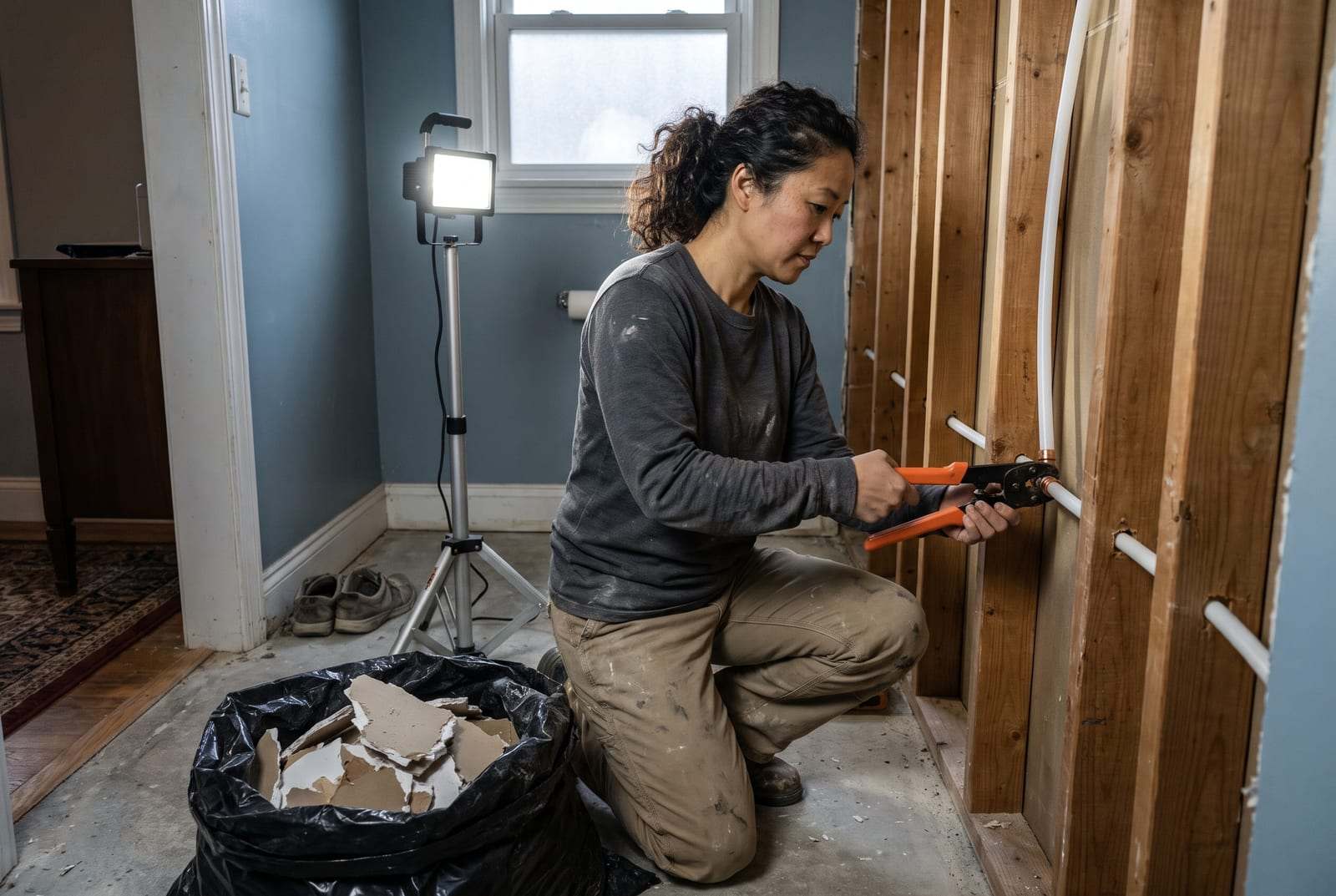
Each pipe material has its own way of being joined, and mixing methods is where many leaks start. PEX is crimped or expanded onto fittings made for that system, with the tool made for it. Copper is soldered with lead-free solder or joined with press fittings. ABS drain pipe is glued with cement made for ABS, on cut ends that are square and clean. A rushed joint may hold for a week and weep for a year after.
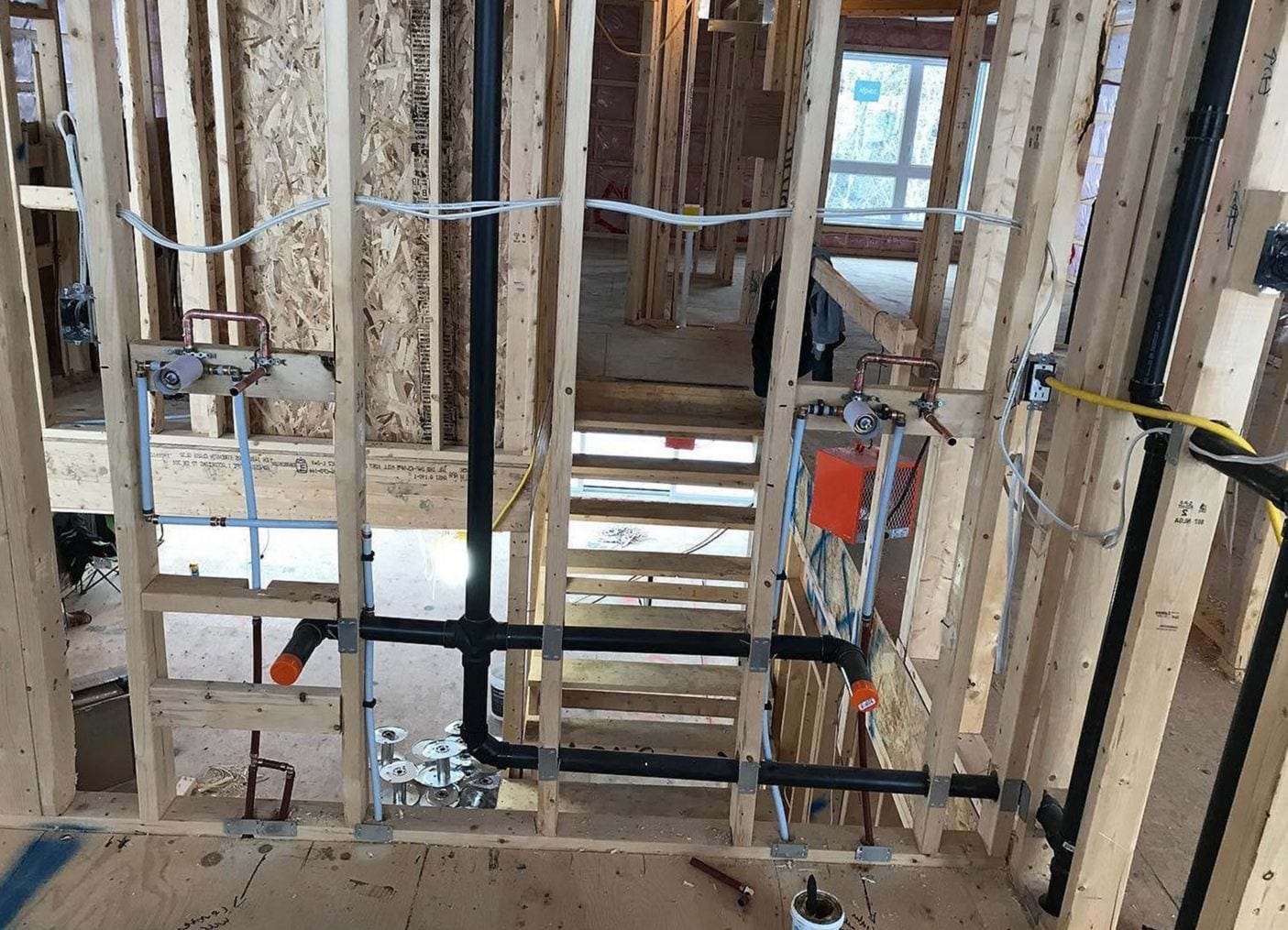
On a remodel or a repipe, much of the job happens with the walls open. Supply lines run between the studs, drain lines fall at a steady slope toward the main, commonly a quarter inch per foot on household drains, and vents run up through the roof so the drains can breathe. Valve boxes are set so they sit flush with the finished wall.
Every pipe is strapped so it cannot bang, sag or rub. Where a pipe passes close to the face of a stud, a steel plate covers it so a drywall screw cannot find it later. Copper that rubs against framing or another pipe wears through in time, and a pinhole leak is the result.
Testing: Proving the Work Holds
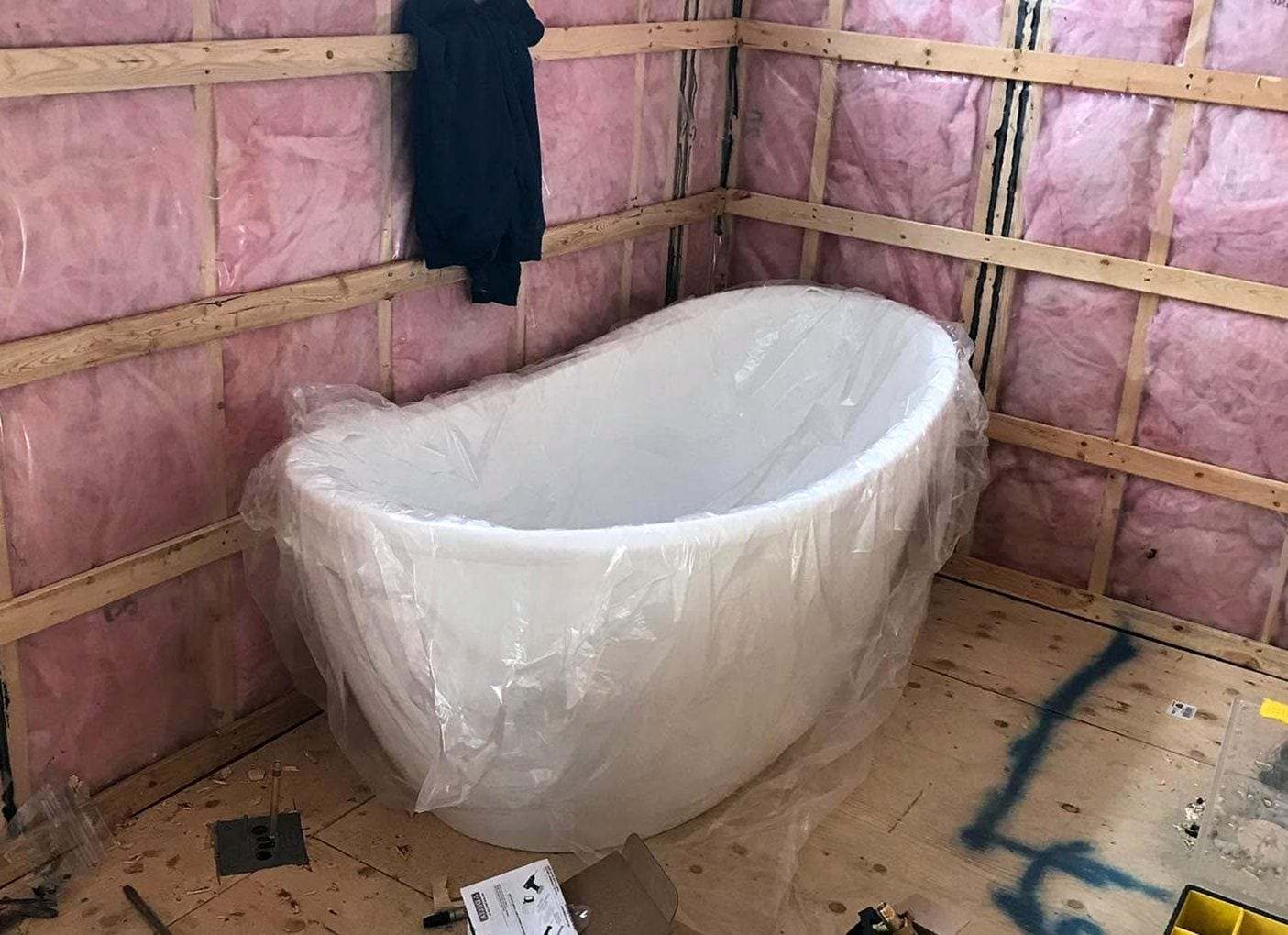
New supply lines are pressure tested before anything covers them: the lines are filled and brought up to pressure, and the gauge has to hold steady. Drain and vent lines are filled with water or held under air the same way. On a new tub, the drain and overflow are filled and watched for leaks before the tile goes up or the access panel goes on.
Smaller repairs are tested the plain way. The water goes back on slowly, the air is bled out at the faucets, and each fixture is run hot and cold. At Sirrine Plumbing, every fixture worked on is run before leaving, and a dry paper towel goes underneath to check for drips. A damp spot on a dry towel shows a weep long before it would stain the bottom of a cabinet.
On a water heater, testing means watching it heat, checking that the relief valve has its discharge pipe in place, making sure a gas heater’s vent draws, and checking every joint on the water lines and the gas line.
Safety and Code Rules
Plumbing codes exist because water, gas, heat and sewage hurt people when the work is wrong. These rules come up on most jobs, whoever does the work. The details vary from one city to the next; the reasons behind them do not.
| Rule | Applies to | Why it exists |
|---|---|---|
| Permits and inspections | Water heater replacements, new or moved water, gas and sewer lines, and remodels that move fixtures; each city sets its own list | A trained second pair of eyes checks work that ends up inside walls and under floors. |
| Water and gas shut off before work | Any repair that opens a pressurized line or touches a gas appliance | An open water line floods the room; an open gas line can fill it with gas. |
| Temperature and pressure relief valve | Every tank water heater | It opens if the water gets too hot or the pressure too high, so the tank cannot burst. Its discharge pipe runs full size to a safe spot, with no cap or valve on it. |
| Water heater venting | Gas water heaters | The vent carries combustion gases, carbon monoxide among them, out of the house. A loose joint or the wrong slope can spill them inside. |
| Drain venting | Every drain line in the house | Vents let air into the drains so traps keep their water seal and sewer gas stays out. |
| Backflow prevention | Irrigation systems, hose bibs and equipment tied into the drinking water | It stops dirty water from being pulled back into the supply when the pressure drops. |
| Contractor licensing | Plumbing work done for hire in Arizona | Arizona’s Registrar of Contractors licenses contractors who do plumbing work for hire. A homeowner can ask any contractor for the license number and look it up. |
Permits, Inspections and When Work Is Tested
Does replacing a water heater need a permit?
In many cities it does, because the job involves the gas or electric connection, the venting and the relief valve, all of which bear on safety. Requirements differ from one city to the next, and the city’s building department can say what applies at a given address. Settle it before the work starts, along with who will apply for it.
Who applies for the permit, the homeowner or the contractor?
On work done for hire, the contractor doing the job usually applies for it and arranges the inspections. Homeowners can often apply for permits on work they do on their own home. Either way, the permit should be settled before a wall is opened, not after it is closed.
What does a plumbing inspector check?
At rough-in, with the walls open: pipe sizes, supports, drain slope, vents and a pressure test on the new lines. At final: the fixtures, the water heater’s relief valve and discharge pipe, the venting, and the gas connection where there is one. Each stage is signed off before the next one covers it.
When does new plumbing have to be tested?
Before anything covers it. New supply lines are held under pressure, and drain and vent lines are filled with water or air, while every joint is still in sight. Once the fixtures are set, they are run again under normal use. A small repair, such as a new valve or trap, is tested by turning the water back on and watching the joints.
What should I check after a plumber leaves?
Run the fixture that was worked on, hot and cold, and look underneath it with a flashlight a few times over the next day or two. A dry paper towel laid under a joint shows a slow drip before it shows anywhere else. A damp spot is worth a call while it is still small.
Water Heaters, Drains and Fixtures
The same four stages run through every kind of job the shop takes on, from a dripping faucet to a new water heater.
- Water Heaters Repair, replacement and new installs of tank and tankless heaters. Tank and tankless units, sediment flushing
- Drain Cleaning Slow sinks, backed-up toilets and main line stoppages cleared. Camera inspection of drain and sewer lines
- Fixtures Faucets, toilets, sinks and disposals repaired or put in new. Running toilets, dripping spouts, water softeners
To have a leak, a drain or a heater looked at, send the details and the shop will be in touch to set up the estimate.