Drain Cleaning and Sewer Lines in Mesa
A slow bathroom sink, a toilet that will not flush down, water rising in the shower when the washer empties: each of these points to a different spot in the drain system, and each one calls for a different fix. Sirrine Plumbing clears drains in Mesa homes and small commercial buildings, from a single trap under a sink to the main line that carries everything out to the sewer.
The first job on any clog is working out where it sits. A plunger is the right tool for one fixture and the wrong one for a blocked main. A cable run through the wrong opening pushes the clog further along instead of clearing it.
Sinks, Tubs, Toilets and the Main Line
- Kitchen and bathroom sinks. Grease, food scraps and coffee grounds in the kitchen; hair, toothpaste and soap in the bathroom. Most sink clogs sit in the trap or the first few feet of pipe behind the wall.
- Tub and shower drains. Hair binds up with soap and catches on the stopper linkage or the crossbars of the drain. Hard water makes it worse: its minerals react with soap and leave a sticky scum along the pipe.
- Toilet blockages. Too much paper at once, wipes sold as “flushable,” or a small toy wedged in the toilet’s built-in trap. A closet auger reaches most of them without pulling the toilet off the floor.
- Main line stoppages. When the building drain or the sewer line closes up, the lowest drains back up first, usually a tub or shower. Grease, wipes, roots at a joint and sags in the buried pipe are the usual causes.
- Camera inspection. A waterproof camera on a push cable goes down the line through a cleanout and shows what is inside: roots, cracks, offset joints, scale, or a low spot holding water.
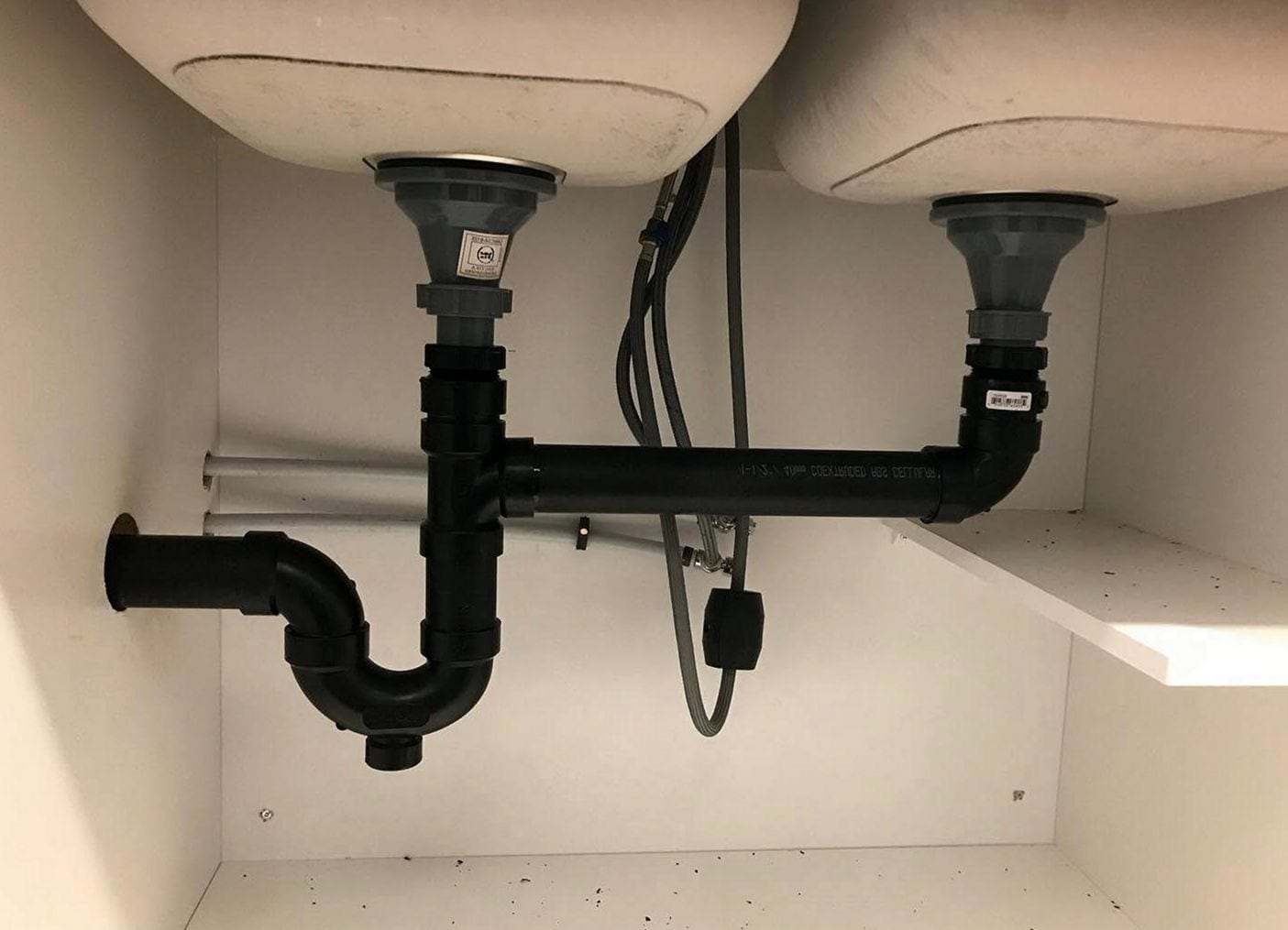
A double kitchen sink is a common trouble spot. Both basins drain through one trap, and the disposal side sends ground-up food into the same short run of pipe. When one side backs up into the other, the clog is past the tee where the two basins join, in the trap or the arm running into the wall. Clearing it means opening the trap, running a cable through the arm, and then running hot water down both sides to check the flow.
After a trap or a tailpiece has been taken apart, the slip nuts are the weak point. One that weeps a drop at a time can rot a cabinet floor long before anyone notices it, so the drain gets run hard and the joints checked dry before the cabinet is packed again.
Drain Troubleshooter: Where the Blockage Likely Sits
Answer three questions about what the drains are doing. The result names the likely cause, a safe first step, and whether it can wait for an estimate or needs a call now.
Choose which drains are affected, how they drain and any sounds or smells, then press “Show the Likely Cause.”
Drain Symptoms and What They Usually Mean
The same few symptoms turn up again and again. Read across a row for the likely cause, what a homeowner can safely try, and the point where it is time to have the line cleared.
More columns to the right: swipe.
| Symptom | Likely cause | Safe first step | When to request service |
|---|---|---|---|
| One bathroom sink drains slowly | Hair, toothpaste and soap in the stopper or trap | Pull the stopper, clean it, and plunge with the overflow hole covered | It is still slow after plunging, or it slows again within weeks |
| Toilet will not flush down | Paper, wipes or an object in the toilet’s trap | A flange plunger, slow firm strokes; stop if the bowl nears the rim | Plunging does not clear it, or it clogs every week or two |
| Kitchen sink backs up into the other basin | Grease and food past the tee where the basins join | Run the disposal with cold water; skip chemical cleaners | Plunging with the other basin sealed does not clear it |
| Toilet gurgles when the tub drains | Shared branch line or its vent partly blocked | Run one fixture at a time in that bathroom | The gurgling keeps on, or water rises in another fixture |
| Water comes up in the shower when the washer drains | Main line partly blocked | Hold off on laundry and the dishwasher | Now, before the next load of laundry floods the shower |
| Sewer smell in a bathroom nobody uses | A dry trap letting sewer gas through | Run water in the sink, tub and any floor drain for a minute | The smell comes back with the traps full |
Chemical Cleaners, Tree Roots and Clogs That Keep Coming Back
Are chemical drain cleaners safe to use?
They work on some soft clogs, but they are hard on the pipe and on whoever opens the drain next. A caustic cleaner that cannot get through a full blockage sits in the trap, where it can burn skin and eyes when the trap comes off, and repeated doses wear on older metal drain pipe. They do little to a mat of hair and nothing to a root. If one has already gone down the drain, say so before anyone opens it.
How do tree roots get into a sewer line?
Roots grow toward the moisture that seeps out of a loose joint or a crack, then push in through it and spread inside the pipe, where they catch paper and grease. Older clay and cast-iron lines with many joints are the most open to it; glued plastic lines much less so. A cutting head on a drain cable clears the roots, but they grow back from what is left outside the pipe, so a line that keeps filling with roots usually needs the bad section repaired.
Why does the same drain keep clogging?
A clog that returns in the same place usually has a reason in the pipe itself: a sag that holds water and debris, a joint that sits off-center, a long run with too little slope, a blocked vent, or buildup that a cable punched a hole through rather than scraped clean. A camera inspection shows which one it is, so the repair goes after the cause and not only the clog.
Is it safe to plunge a toilet when other drains are backing up?
Not when the main line is blocked. Plunging pushes the water somewhere, and with the main stopped it comes up at the lowest drain in the house, often a tub or shower. Stop using water everywhere and get the main line cleared first.
What is a cleanout, and should I open it?
A cleanout is a capped fitting on the drain line, usually outside near the foundation or in the yard, sometimes on a garage wall, that gives a cable a straight path into the main line. Leave the cap on while the line is backed up: the water behind it is under pressure and comes out with force once the cap loosens.
When the Pipe Itself Is the Problem
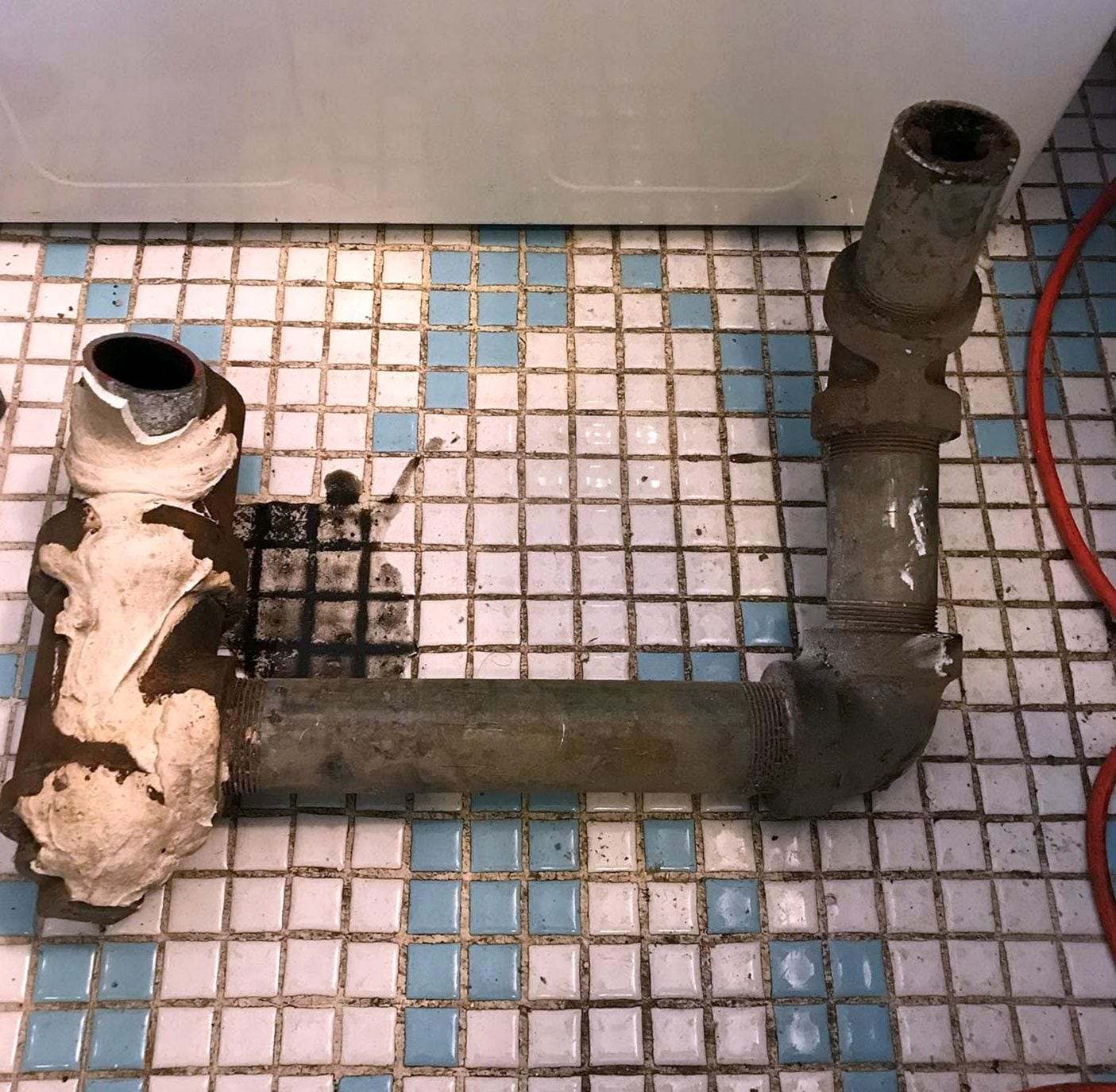
Old drain pipe, cast iron in particular, corrodes from the inside. Rust and scale build up along the bottom of the pipe, roughen the wall so paper and grease catch on it, and narrow the opening until a cable can only punch a hole through the buildup. In time the bottom of the pipe thins out and cracks. A section in that shape gets cut out and replaced with new pipe, and the joints at both ends are tested with water before anything is closed up.
A camera inspection of drain and sewer lines takes the guessing out of it. The camera goes in through a cleanout or a pulled toilet and shows roots, cracks, offset joints and sags holding water, along with how far down the line each one sits. A locator in the camera head marks that spot from above ground.
Knowing the exact spot matters most when a buried line has to be dug up. The caliche layer in Mesa’s desert soil is hard and slow to dig through, so a repair that starts in the right place saves a lot of slow digging over one that starts with a guess.
Getting a Slow or Blocked Drain Cleared
When you send a request, list the drains that are slow, what you have already tried, and whether you hear gurgling or smell sewer gas. If dirty water is coming up onto the floor, call instead and stop using water until the line is open.