Plumbing for Mesa Shops, Offices and Rentals
A restroom that will not flush in a small office, a kitchen drain behind a café that slows every few weeks, a tenant without hot water on a Monday morning: plumbing in a small commercial building carries its own kind of pressure, because the problem stops work or lands on people who did not cause it. Sirrine Plumbing works for small commercial customers in Mesa and the neighboring towns as well as homeowners: offices, shops, restaurants and cafés, and small rental and multi-unit buildings.
The trade work is the same as in a house, with more people leaning on each fixture. Restrooms see heavier use, kitchen drains carry more grease, and a leak in one unit can reach the one below it. The details around the job matter more too: who to call on site, how to get in, and whether tenants need notice before the water goes off.
Plumbing Needs by Property Type
Each kind of property tends to call with the same few problems. Putting the right details in the first request saves a round of phone calls before the estimate.
| Property type | Typical plumbing needs | Details to include in a request |
|---|---|---|
| Office | Running toilets, dripping restroom faucets, a slow break-room sink | Number of restrooms, when the building is open, who holds the keys |
| Retail shop | A single restroom, a mop sink, a small water heater | When the shop opens, and whether work has to happen before opening |
| Restaurant or café | Kitchen drains slowed by grease, hand sinks, water heaters under heavy use | Which drains are slow, when the grease interceptor was last pumped, when the kitchen is quiet |
| Small multi-unit or rental | Leaks between units, shared drain lines, a water heater in each unit | Units affected, a tenant contact, the notice tenants need before entry |
| Salon or barbershop | Hair in sink drains, scaled faucets, heavy hot water use | How many sinks, and how often each one slows |
| Church or community space | Restrooms that sit unused for days, then see heavy use; kitchen sinks | The event schedule, and who can open the building |
Information for a Multi-Unit or Tenant-Occupied Request
A rental or a building with several units brings access questions that a house does not. Answer these in the request:
- Property name and the address of the building affected, if the property has more than one.
- Number of units affected, with the unit numbers and what each one is seeing: no water, a slow drain, water through a ceiling.
- An on-site contact with a phone number: a manager, a maintenance lead or a tenant who will be home.
- Access arrangements: keys, a lockbox, a gate, and where a work vehicle can park.
- Tenant notice needed before anyone enters a unit or shuts off the water, and how much notice the lease or the association requires.
- Who approves the work: the owner, the manager or the association, and who should receive the estimate.
Put all of it in one request, along with the property type and the problem in each unit. For water running right now, call instead.
Restroom Sinks, Faucets and Toilets Under Heavy Use
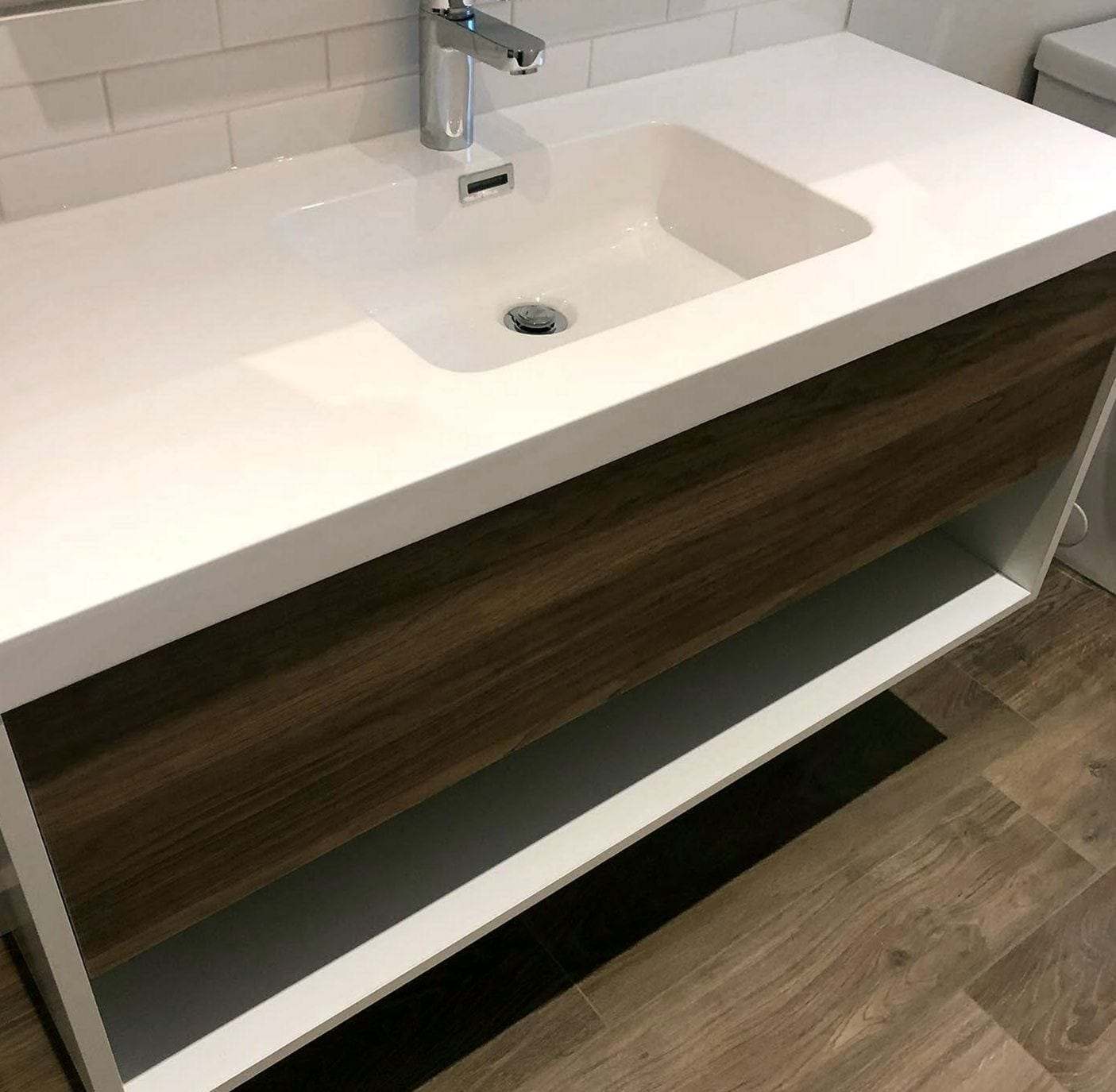
A restroom sink in a shop or office gets used more in a week than a sink at home does in a month. A single-handle faucet’s cartridge wears and starts to drip, the aerator clogs with scale from Mesa’s hard water, and the drain slows with soap and scraps of paper towel. Toilets run when a flapper wears out or a fill valve sticks. Fixture repair and replacement covers faucets, toilets and sinks, and every fixture worked on gets run and checked underneath with a dry paper towel for drips before the job is done.
A floating vanity with an integrated sink, like many newer restrooms have, keeps its trap and supply stops in plain view. Older cabinets hide them behind doors that collect cleaning supplies, which is where slow drips go unnoticed for months. Keep the space under every restroom sink clear enough to see the floor.
Kitchen Drains and the Lines Behind the Walls
Grease is the main reason restaurant and café drains close up. It goes down warm and liquid, then sets up as it cools in the line and collects food and soap until the pipe is choked. Hot water only moves it further down the line. A kitchen drain that slows on a schedule needs the line cleared fully, and a look with a camera shows whether a sag or a rough joint is holding the grease. Drain cleaning and camera inspection cover restroom and kitchen lines alike.
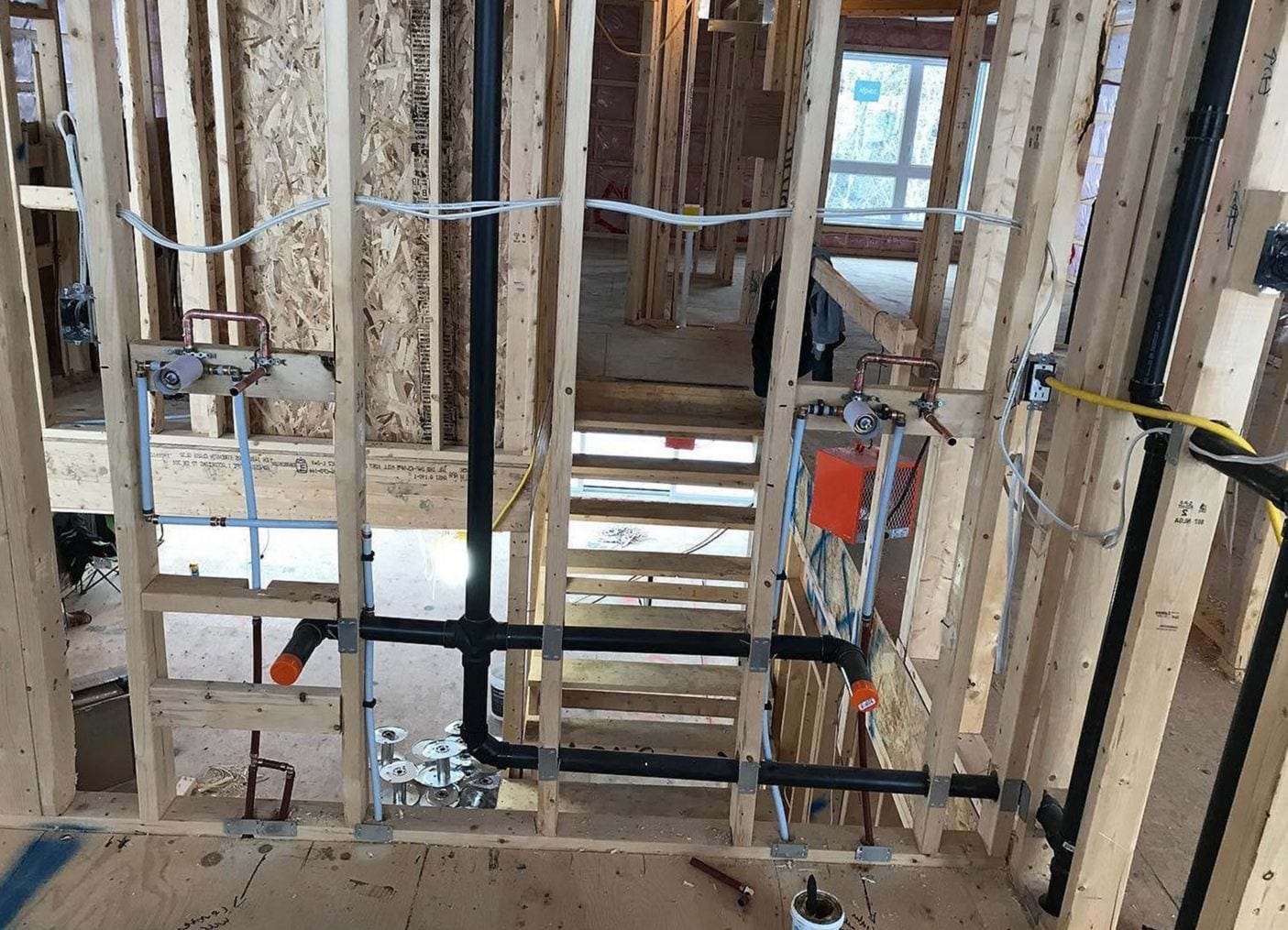
Most of a building’s plumbing ends up behind drywall: PEX or copper supply lines to each fixture, drain and vent pipe sloped back toward the main, and valve boxes for appliances. Knowing where those lines run, and where the shutoffs for each restroom or unit are, makes every later repair simpler and less destructive. If a remodel leaves the walls open, photograph them before they close; those pictures become a map for the next leak.
Several Units, Restroom and Kitchen Drains, and Repeat Work
Can one request cover problems in several units?
Yes. List each unit with what is wrong there, which ones are occupied and who the on-site contact is. If the units share a symptom, such as slow drains on the same stack or low pressure on one floor, say so: it points toward a shared line rather than a separate repair in each unit.
Why do restroom drains in a shop or office clog so often?
Heavy use, and things that should never go down them: paper towels, wipes and, in a salon or a gym, hair. A restroom many people share also tends to go unreported until it overflows. A small sign about what not to flush, and asking staff to mention a slow drain the first day it slows, catches most of it early.
What keeps a restaurant kitchen drain from closing up with grease?
Scrape plates into the trash before they reach the sink, keep fryer oil and pan grease out of the drains entirely, and keep the grease interceptor pumped on the schedule the property requires. A line that still slows between cleanings may have a sag or a rough spot that holds grease, and a camera inspection will show it.
What maintenance helps a small commercial building avoid repeat calls?
Flushing water heaters to clear sediment, checking shutoff valves and supply lines so they work when they are needed, and a camera inspection of any drain line that has clogged before. Scale and corrosion build up the same way in a shop as in a house, and catching them early is usually cheaper than a failed line in the middle of a business day.